English
Unleash the Heat: Cooking with Red Dried Chili Peppers
Created on 03.16
We love adding a bit of fire to our meals. Red dried chili peppers bring complex flavor and warmth. They're a must-have in our pantry because they last a long time.
red dried chili peppers
These dehydrated pods add a deep, smoky taste that fresh ones can't match. Whether it's a bold salsa or a hearty stew, cooking with chili peppers lets us control the spice. It's all about finding the perfect balance of heat and taste.
See how these crimson gems can turn your meals into a pro culinary experience. We're excited to share our top tips for using these fiery treats. Let's explore the vibrant world of global spices together.
Key Takeaways
- Enhance depth and smokiness in various savory dishes.
- Learn the best ways to rehydrate pods for maximum flavor.
- Control heat levels by removing or keeping the seeds.
- Store your spices correctly to maintain potency over time.
- Discover which varieties pair best with specific regional cuisines.
- Master the art of toasting to unlock hidden aromatic oils.
Why We Love Cooking with Red Dried Chili Peppers
We love cooking with red dried chili peppers for their rich flavor and versatility. These peppers are a key ingredient in many cuisines. They are also a favorite among cooks for their unique taste.
The Smoky, Complex Flavors of Dried Chilies
Red dried chili peppers add a smoky, complex flavor to our dishes. Unlike fresh peppers, they have a deeper taste. This makes the flavor of a dish more intense.
The drying process concentrates the peppers' natural flavors. This results in a more intense taste experience. For more on dried chilies, check out this guide on Mexican dried chilies.
Health Benefits of Hot Peppers
Red dried chili peppers are loved for their health benefits too. They are full of antioxidants and capsaicin. This compound is known for its anti-inflammatory properties.
Adding these peppers to our meals boosts our health. The antioxidants protect cells, and capsaicin may help with pain and improve blood flow. So, cooking with red dried chili peppers is a tasty way to get healthier.
Versatility in Our Kitchen
Red dried chili peppers are versatile in our kitchen. They fit into many dishes, from traditional to innovative recipes. They can spice up a stew, make a sauce, or add heat to any meal.
They are easy to rehydrate and use in different recipes. This lets us try new flavors and cuisines. Their versatility makes them a must-have for any adventurous cook.
Understanding Different Types of Red Dried Chili Peppers
Red dried chili peppers come in many types, each with its own unique taste and heat level. They add flavor to many dishes. Knowing the differences helps you pick the right pepper for your recipe.
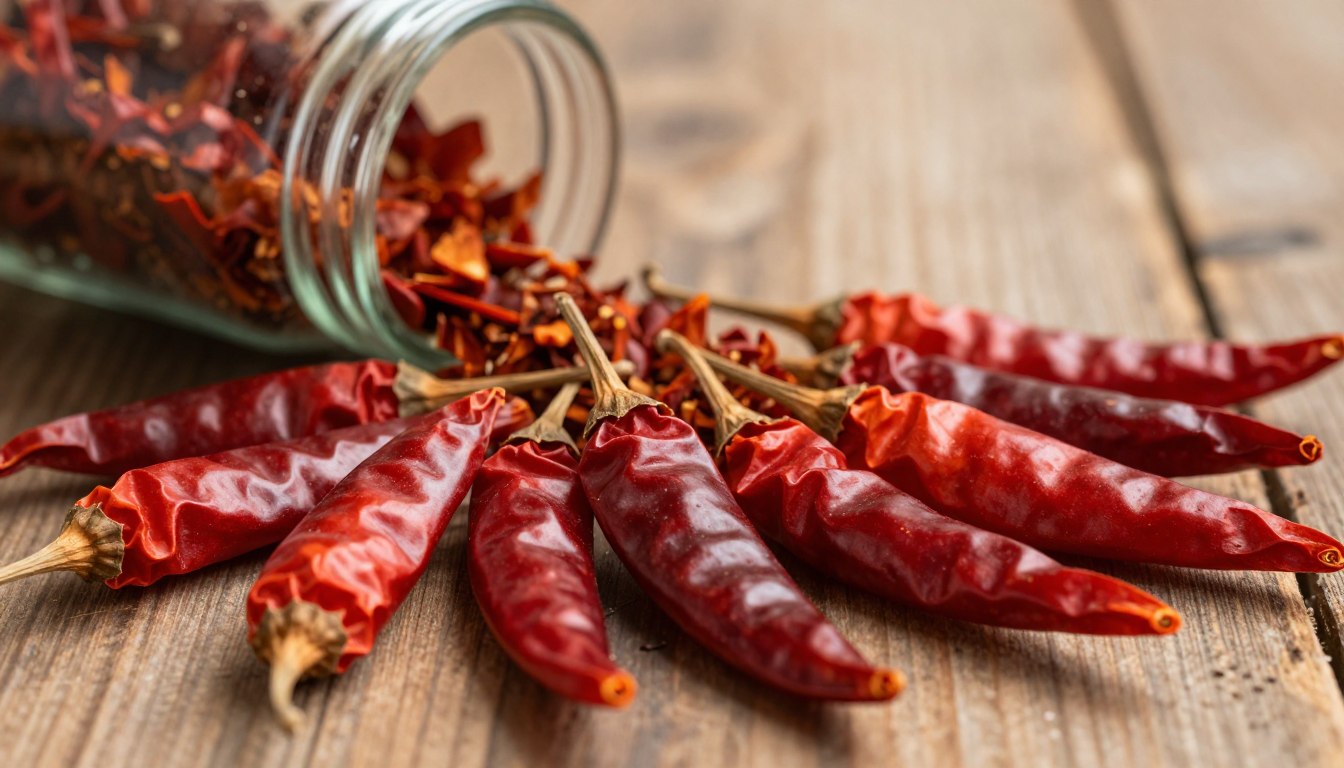
A visually striking arrangement of various types of dried red chili peppers, featuring a foreground with a selection of whole dried chilies like Guajillo, Ancho, and Pasilla, showcasing their rich textures and vibrant colors. In the middle ground, include a few crushed dried chilies spilling from an open spice jar, emphasizing their versatility in cooking. The background should have a rustic wooden surface, slightly blurred to draw focus to the chilies. Use warm, soft lighting to create an inviting atmosphere, highlighting the glossy sheen on the chilies while casting gentle shadows. This composition should evoke a sense of culinary artistry and passion for spice cooking, perfect for an article about red dried chili peppers.
Mild Varieties: Ancho and New Mexico Chilies
Mild red dried chili peppers add depth without too much heat. Ancho chilies have a mild, sweet taste with hints of chocolate and fruit. They're great in sauces and braising liquids. New Mexico chilies are slightly sweet and earthy, perfect for chili con carne and stews.
- Ancho Chilies: Mild, sweet, with hints of chocolate and fruit
- New Mexico Chilies: Earthy, slightly sweet, ideal for chili and stews
Medium Heat: Guajillo and Cascabel Peppers
Guajillo and Cascabel peppers provide a bit more heat, but not excessively. Guajillo peppers have a fruity taste and moderate heat, excellent for sauces and marinades. Cascabel peppers possess a rich, woodsy flavor and moderate heat, attributed to their rattling seeds.
- Guajillo Peppers: Fruity, moderate heat, versatile in sauces and marinades
- Cascabel Peppers: Woodsy flavor, moderate heat, distinctive rattling seeds
Hot Options: Arbol and Cayenne Chilies
For dishes needing a lot of heat, Arbol and Cayenne chilies are perfect. Arbol chilies are bright red and have a sharp, crisp heat, ideal for salsas and hot sauces. Cayenne peppers add intense heat to any dish.
- Arbol Chilies: Bright red, sharp heat, great for salsas and hot sauces
- Cayenne Peppers: Intensely hot, used for adding a spicy kick
Extra Spicy: Thai and Pequin Peppers
For those who love extreme heat, Thai and Pequin peppers are the choice. Thai chilies have intense, fiery heat, common in Southeast Asian dishes. Pequin peppers, or bird's eye chilies, are small but pack a big punch, perfect for adding intense heat.
- Thai Chilies: Fiery heat, used in Southeast Asian cuisine
- Pequin Peppers: Small, intensely hot, great for adding a spicy kick
How to Prepare and Rehydrate Dried Red Chilies
To get the most out of dried red chilies, follow a few easy steps. They're great for adding smoky flavor to sauces or a spicy touch to marinades. Knowing how to prepare them is key.
Toasting Dried Chilies for Enhanced Flavor
Toasting dried chilies boosts their taste. Just put them in a dry skillet over medium heat. Turn them often to avoid burning. This brings out their natural oils and intensifies their flavor.
Rehydration Methods We Recommend
Rehydrating dried chilies is a must for most recipes. There are several ways to do it, each with its own benefits.
Hot Water Soaking Technique
Soaking dried chilies in hot water is quick. Just submerge them in hot water for 20-30 minutes. They'll become soft and ready to use. For more tips, check out this resource.
Simmering Method for Softer Texture
Simmering chilies in water or broth makes them softer. It also adds extra flavors from the liquid.
Rehydration Method | Time Required | Resulting Texture |
Hot Water Soaking | 20-30 minutes | Soft and pliable |
Simmering | 30-60 minutes | Very soft, easily blendable |
Removing Seeds and Stems
After rehydrating, remove seeds and stems easily. Cut off the stem, slit the chili, and shake out the seeds. This helps control the heat in your dish.
Making Dried Red Pepper Flakes at Home
Making dried red pepper flakes at home is easy. Dry the chilies further if needed, then grind them into flakes. Use a spice grinder or mortar and pestle.
Dried red pepper flakes add a burst of chili flavor. They're convenient to use and can be stored for a long time.
Creative Culinary Uses for Red Dried Chili Peppers
Red dried chili peppers add a rich, smoky flavor to many dishes. They're great for adding depth and a bit of heat. Use them in stews or spicy sauces for a flavorful twist.
These peppers are versatile and can enhance many recipes. They work well with meats and vegetables, adding a unique flavor.
Creating Rich Chili Sauces and Salsas
Red dried chili peppers are perfect for making chili sauces and salsas. Rehydrate them and blend with tomatoes and spices for a tasty condiment. It's great on tacos or grilled meats.
To make a simple chili sauce, rehydrate the peppers in hot water. Blend with garlic, onion, and vinegar for a tangy sauce. Adjust the heat by using more or fewer peppers.
- Rehydrate red dried chili peppers in hot water
- Blend with garlic, onion, and vinegar
- Adjust the heat level to your taste
Infusing Oils and Vinegars
Infusing oils and vinegars with red dried chili peppers is another creative use. It captures their flavor and heat, adding a subtle kick to dishes.
To infuse oil or vinegar, place peppers in a clean jar and cover with liquid. Let it sit for a few days. Then, strain and use in cooking.
Adding Depth to Soups and Stews
Red dried chili peppers enhance soups and stews with their rich flavor. Rehydrate them and add to your pot for extra flavor.
They're great in chili con carne, beef stew, and vegetable soup. You can also make a flavorful broth by simmering them in water or stock.
Spicing Up Marinades and Rubs
Red dried chili peppers add heat and flavor to marinades and rubs. They make meats and vegetables taste delicious and aromatic.
To make a spicy marinade, blend rehydrated peppers with olive oil, garlic, and herbs. For a dry rub, grind the peppers into powder and mix with spices like cumin and coriander.
Our Favorite Chili Pepper Recipes to Try at Home
We're excited to share our favorite recipes that use dried red chili peppers. These peppers add a unique flavor and heat to many dishes. They make everything from comfort foods to fusion cuisine better.
Classic Chili Con Carne with Dried Chilies
Our go-to recipe is a classic chili con carne. It's a favorite for a reason. Dried red chilies take it to the next level.
Key Ingredients and Preparation
To make this chili, you'll need ground beef, onions, garlic, and dried red chilies. Use a mix of ancho and guajillo chilies for their rich flavor and moderate heat. Rehydrate the chilies, then blend them into a smooth paste.
Rehydrating Dried Chilies: Soak the chilies in hot water for about 20 minutes. They should be soft and pliable.
Homemade Enchilada Sauce
Our favorite recipe is homemade enchilada sauce. It's a must-try for anyone who loves Mexican food.
Achieving the Perfect Consistency
The key to great enchilada sauce is the right consistency. It should coat your enchiladas but still pour. Blend the rehydrated chilies with tomato paste, garlic, and spices. Simmer until it thickens.
"The use of dried chilies in enchilada sauce adds a depth of flavor that is hard to achieve with fresh chilies alone. It's a rich, complex flavor that elevates the entire dish."
Chef Maria Rodriguez
Spicy Arrabbiata Pasta
For a spicy twist, try arrabbiata sauce with dried red chilies. The heat pairs well with the tanginess of canned tomatoes.
Asian-Inspired Kung Pao Chicken
Dried red chilies are key in many Asian dishes, like our favorite Kung Pao chicken. They add a spicy kick that complements soy sauce and garlic.
Recipe | Key Ingredients | Heat Level |
Classic Chili Con Carne | Ground beef, dried red chilies, onions, garlic | Medium |
Homemade Enchilada Sauce | Dried red chilies, tomato paste, garlic, spices | Mild to Medium |
Spicy Arrabbiata Pasta | Dried red chilies, canned tomatoes, garlic, olive oil | Hot |
Asian-Inspired Kung Pao Chicken | Dried red chilies, chicken, soy sauce, garlic, peanuts | Hot |
Smoky Red Chili Butter
For a simple yet impactful recipe, try smoky red chili butter. It's great for grilled meats or vegetables.
Using dried red chilies in your cooking adds depth, heat, and complexity. We hope these recipes inspire you to try new things with chili peppers!
How to Store Dried Chili Peppers for Maximum Freshness
To keep your dried chili peppers fresh and flavorful, proper storage is key. The way you store them greatly affects their taste, smell, and quality.
Choosing the right container is crucial for storing dried chili peppers. Airtight containers are best because they keep moisture and air out. Glass jars or resealable plastic bags work well, but make sure they're dry before storing the chilies.
Proper Storage Containers and Conditions
Storage conditions are as important as the containers. Keep dried chili peppers in a cool, dark place, away from sunlight and heat. This helps keep their color and flavor bright. Also, keep them dry to avoid staleness or mold.
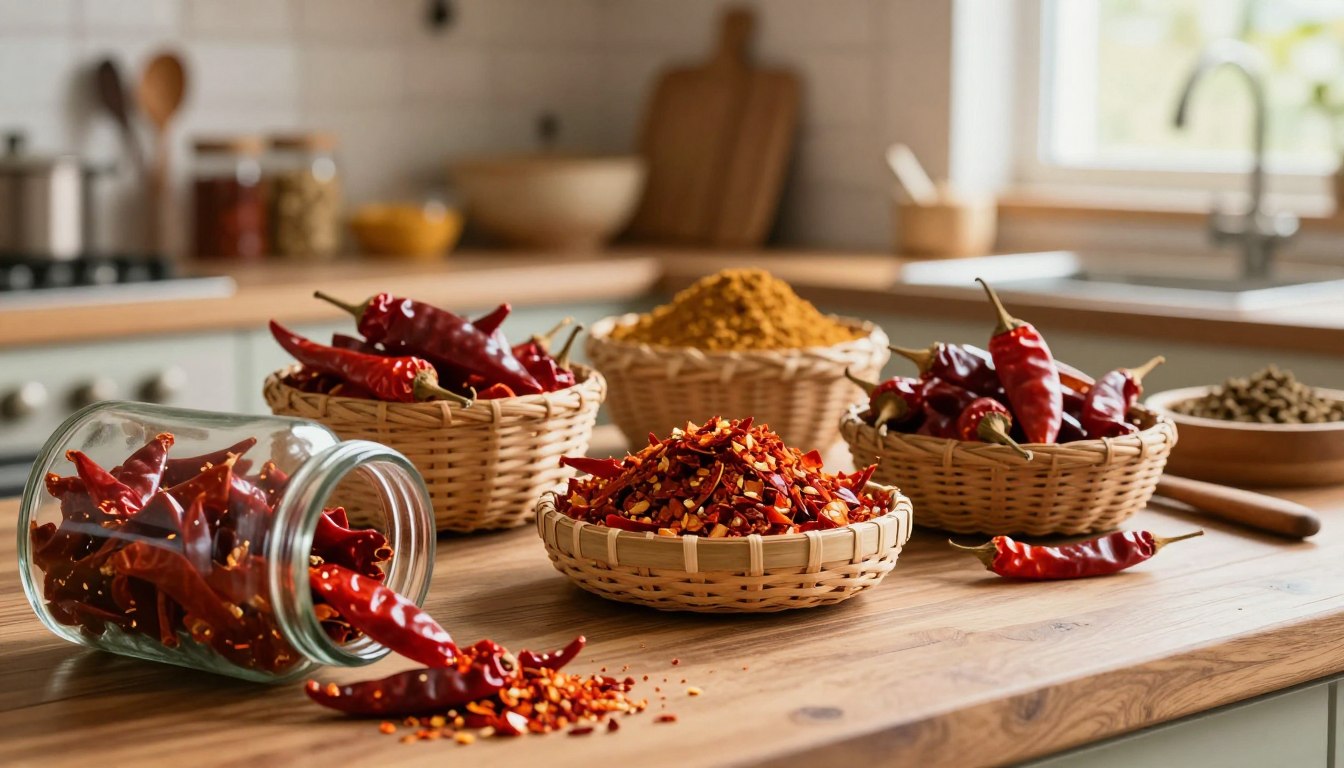
A rustic kitchen setting, with a focus on beautifully organized dried red chili peppers. In the foreground, a glass jar filled with vibrant red dried chili peppers is partially open, allowing a sprinkle of dried chili flakes to spill out onto a wooden countertop. In the middle, a variety of peppers—some whole, some crushed—are artfully arranged in woven baskets, showcasing their different shapes and sizes. The background features a softly blurred shelf lined with spices and cooking utensils, with warm, natural lighting streaming in from a nearby window, creating a cozy and inviting atmosphere. The camera angle is slightly above eye level, capturing the richness of the colors and textures, evoking warmth and a passion for cooking.
Shelf Life and Signs of Spoilage
Dried chili peppers can last up to a year or more if stored right. They need to be in airtight containers in a cool, dark spot. But, always check for spoilage signs. Look for mold, a musty smell, or a loss of color and aroma. If you see these, it's time to replace them.
Freezing vs. Pantry Storage
Some people freeze their dried chili peppers to keep them longer. Freezing helps preserve the flavor and aroma. However, it's not always necessary unless you live in a humid area. Pantry storage is sufficient if your location is cool and dry. Just remember to keep them away from moisture and heat.
In summary, storing dried chili peppers is straightforward but requires some care. By selecting appropriate containers and conditions, you can enjoy your dried chilies for an extended period.
Conclusion
We have explored the numerous benefits and applications of red dried chili peppers in culinary practices. They contribute smoky, complex flavors and provide health advantages. They are also highly versatile in the kitchen.
Incorporating chili peppers into cooking adds depth and excitement to our meals. We can create rich chili sauces and salsas, or enhance marinades and rubs with spice. Dried chili peppers are a valuable asset to any kitchen.
As we keep trying new things with red dried chili peppers, we'll discover new flavors and recipes. Incorporating these peppers into our cooking can elevate our dishes. It allows us to explore the rich flavors they offer.
FAQ
Why should we choose red dried chili peppers over fresh ones for our recipes?
Fresh peppers are crunchy, but dried ones offer a deeper flavor. The drying process intensifies smoky, earthy, and fruity notes. This enriches our dishes, from beef stew to bean preparations.
What is the best method for how to store dried chili peppers to keep them potent?
Storing dried chili peppers right is key. Use airtight containers like Ball Mason jars in a cool, dark spot. For longer storage, the freezer helps keep their oils and color bright.
How do we properly rehydrate dried red chilies for sauces?
Rehydrating dried chilies is crucial. First, toast them in a Lodge cast iron skillet for a minute. Then, soak them in boiling water for 15 to 20 minutes. They're ready to blend into sauces or salsas.
Can we make our own dried red pepper flakes at home?
Yes, making your own flakes is rewarding. Use dried Arbol or Cayenne peppers in a Vitamix or spice grinder. It adds intense heat to your recipes.
Which hot peppers are best for someone who prefers a milder flavor?
For those who prefer less heat, Ancho or New Mexico chilies are great. They're milder and sweeter, perfect for adding flavor without burning.
What are the primary health benefits we get from consuming hot peppers?
Hot peppers are tasty and healthy. They're full of capsaicin, which may boost metabolism and fight inflammation. They're also rich in Vitamin C and antioxidants, making meals nutritious and delicious.
Should we remove the seeds before cooking with chili peppers?
It depends on the desired heat level. Seeds and inner membranes are very spicy. Remove them for milder flavors, like in enchilada sauce. Leave them in for a fiery Thai curry.
LOADING ..
Leave your information and we will contact you.